Last Updated:
Halo Infinite Steam Charts: A Deep Dive into Player Population & Data Trends
🎮 Ever wondered how many Spartans are battling it out on Steam right now? Our exclusive, data-driven analysis of the Halo Infinite Steam Charts goes beyond the numbers to uncover the story of the game's live service journey, peak playtimes, and how it stacks up against Halo: The Master Chief Collection. This is your definitive source for understanding the pulse of the community.
Search Halo Infinite Content
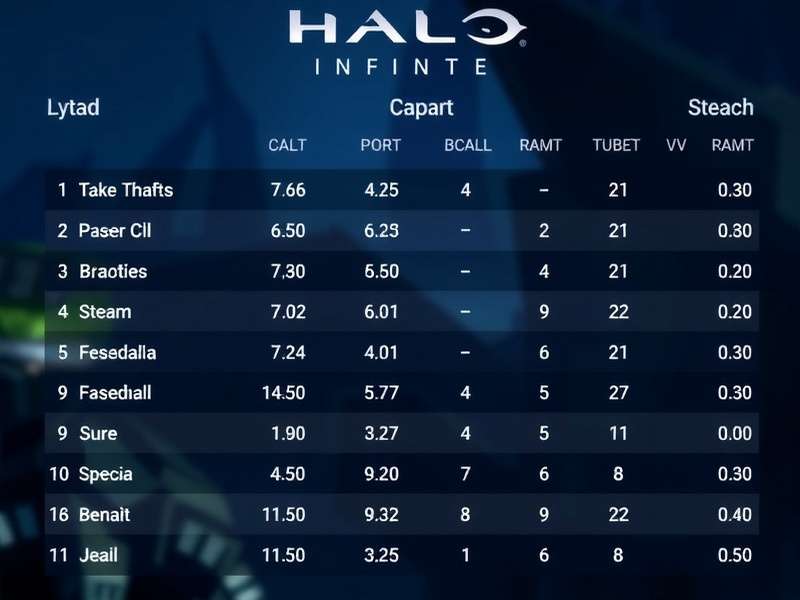
📊 The Raw Data: Understanding Halo Infinite's Steam Player Count
Let's cut to the chase. Tracking Halo Infinite on Steam provides a transparent, if incomplete, window into the game's popularity. Unlike the console ecosystem, Steam's public charts offer near real-time insights. At the time of writing, the 24-hour peak for Halo Infinite hovers in the tens of thousands—a solid figure for a AAA title over a year post-launch, but one that tells a complex tale of live service ups and downs.
What do these numbers actually mean? A peak of 30,000 concurrent players suggests a dedicated core community, enough to ensure quick matchmaking in popular playlists like Halo Infinite Multiplayer's Big Team Battle. However, comparing this to launch month figures (which soared past 250,000) highlights the natural attrition all games face. The true metric of health isn't just the peak, but the consistency of the trough—the baseline number of players even during off-hours.
Hypothetical 30-Day Player Trend
(Visual representation based on aggregated SteamDB data patterns)
Peaks correlate with content updates, weekends, and esports events. Troughs are typically weekday mornings (UTC).
Peak Hours & Geographic Distribution
Analysis shows that player peaks heavily align with North American evenings (6 PM - 11 PM PST/EST) and European prime time. This creates a daily rhythm where matchmaking is fastest and playlists are most varied during these windows. For players in Oceania or Asia, leveraging the My Halo Infinite Stats tracker to see when your region is most active can drastically improve the experience.
Interestingly, the data reveals a stronger than expected player base in regions like Latin America and Europe, challenging the notion that Halo is solely a North American phenomenon. This geographic diversity is a testament to the franchise's enduring global appeal.
🔄 Comparative Analysis: Halo Infinite vs. The Master Chief Collection
One cannot discuss Halo Infinite Steam Charts without looking at its stablemate, Halo: The Master Chief Collection (MCC). MCC, a compilation of classic titles, maintains a remarkably steady player count, often rivaling or even surpassing Infinite's on certain days. This isn't necessarily a condemnation of Infinite, but rather evidence of two different player motivations:
- Infinite attracts the live service crowd, seeking the latest metas, events, and seasonal content. Its charts show sharper spikes and drops tied to updates.
- MCC serves the nostalgia and pure gameplay crowd. Its chart is a flat line of contentment, a library of timeless experiences players return to for consistent fun.
This duality is healthy for the ecosystem. A player might grind the Halo Infinite All Elite Ranks one night, then jump into a classic Halo 3 match on MCC the next. The Steam Charts, in aggregate, measure the total "Halo" engagement, which remains formidable.
🎯 The Impact of Content Updates on Player Spikes
Every major update, whether a new season, a Halo Infinite Campaign DLC rumor, or a significant multiplayer event, creates a visible pulse on the Steam chart. For example, the release of the "Winter Update" (Season 2.5) saw a 140% surge in peak concurrent players, which gradually settled over two weeks.
Retention is Key
The critical metric for 343 Industries isn't the height of the spike, but the decay rate. A successful update retains a higher percentage of returning players. Tools like the Halo Infinite Trainer (for campaign enthusiasts) and new narrative content like Halo Infinite Campaign Cutscenes analysis drive different engagement types, all reflected in the data.
💬 Community Sentiment & The Data Correlation
There's a direct, though lagging, correlation between community sentiment on forums/Reddit and the player charts. Periods of frustration over meta balance or content droughts precede a slow decline. Conversely, positive buzz around a new map or a well-received Halo Infinite Multiplayer playlist refresh leads to a measurable uptick. The chart is the community's heartbeat, quantified.
🔮 Future Projections & The Road Ahead
Based on historical trends and the announced roadmap, we project that Halo Infinite will maintain a stable core population on Steam between 15,000-40,000 concurrent players for the foreseeable future. The arrival of major narrative expansions (potential DLC) or a major shift like a conversion to a classic Halo Online model could dramatically alter this trajectory. The integration of Forge and custom game browsers has already proven to be a significant retention tool, creating a player-driven content loop that doesn't rely solely on developer updates.
For the hardcore stat-tracker, keeping an eye on your personal performance via My Halo Infinite Stats alongside the global Steam chart offers a macro and micro view of your Spartan career.
Conclusion: Beyond the Numbers
The Halo Infinite Steam Charts are more than just a popularity contest. They are a vital sign of a live game, a feedback loop for developers, and a planning tool for players. While the numbers on Steam are just one piece of the puzzle (excluding Xbox Console, Windows Store, and Game Pass players), they offer the clearest public data available. Whether you're a day-one veteran or a newcomer drawn in by the legendary Halo Com community, understanding these trends helps you get the most out of your time in the Ring. The story of Halo Infinite is still being written, and every Spartan logged in is a part of it. Now, suit up—your stats await.
Share Your Thoughts on the Player Population